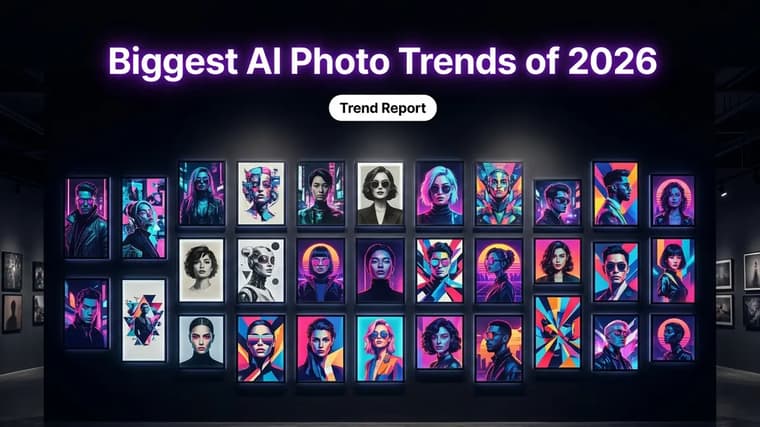
Every few weeks a new AI photo style takes over Instagram and X: one month everyone is a collectible figurine in a box, the next month everyone is starring in a 90s film poster. These trends look complicated, but each one boils down to a repeatable prompt formula. Here are the styles dominating feeds in 2026, why each one works, and a starter prompt you can adapt today.
3D figurine and collectible-style photos
❖What it is
You upload a photo of yourself and ask the AI to turn you into a miniature collectible: a boxed action figure with accessories, a desk-sized vinyl figurine, or a character in blister packaging with your name printed on the card. The result looks like a product shot from a toy store — except the toy is you.
❖Why it works
It flips the usual selfie logic. Instead of trying to look better, you look like merchandise, which is inherently funny and shareable. The packaging also gives the AI a rigid structure to work within — box, plastic window, accessory slots, label text — and modern models handle that kind of constrained product photography very well.
Create a 3D collectible action figure of the person in the uploaded photo, displayed inside retail blister packaging. The figure has a slightly stylized toy-like finish with visible plastic sheen. The cardboard backing is bright orange with the name "ALEX" in bold letters at the top and the tagline "Weekend Explorer Edition". Include three small accessories in separate compartments: a tiny camera, a coffee cup, and a backpack. Studio product photography, soft even lighting, shallow depth of field, white background.
For box text options, accessory ideas, and fixes for common failures (melted faces, gibberish label text), see the full 3D figurine photo trend guide.
Retro cinematic portraits (the 90s saree aesthetic)
❖What it is
Portraits styled like frames from a 1990s Bollywood film: chiffon sarees, golden-hour backlight, wind-blown hair, film grain, and that warm nostalgic color grade. It started with saree portraits and has expanded into a broader "retro cinema" look — vintage suits, old studio backdrops, hand-painted poster styles.
❖Why it works
Nostalgia plus flattery. The soft focus and warm grade are forgiving, the styling feels glamorous without being modern-influencer glossy, and for millions of people it recalls the exact films they grew up with. It also transfers beautifully from a plain phone selfie, which makes it accessible.
A starter direction: describe a woman in a flowing chiffon saree standing on a rooftop at golden hour, wind moving the fabric, 90s film grain, warm faded colors, cinematic 35mm look. The detailed version — including color-grade wording and pose ideas — is in our retro saree portrait guide.
Professional AI headshots
❖What it is
Turning casual selfies into LinkedIn-ready headshots: business attire, studio or soft office-blur backgrounds, controlled lighting, natural skin texture. This is the most practical trend on the list — people use these for job applications, company pages, and speaker bios.
❖Why it works
A studio headshot session costs real money and half a day. AI gets 80 to 90 percent of the way there from photos you already have. The style is also well-defined — corporate photography follows conventions the models have seen countless times — so results are consistent when the prompt is specific about lighting and framing.
The key skill is keeping the face recognizably yours while changing everything else; our AI headshots guide covers the wording that preserves identity, and the broader technique overlaps with keeping characters consistent across images.
Couple and wedding portrait styles
❖What it is
Couples upload one or two photos and generate stylized portraits together: pre-wedding shoot aesthetics, traditional attire they never actually wore, cinematic anniversary portraits, or playful concepts like a movie-poster treatment of the relationship.
❖Why it works
Couple content is already the most-shared personal content online, and AI removes the two biggest obstacles: coordinating a shoot and paying for one. Anniversary and engagement posts with AI portraits have become their own genre. The tricky part is keeping both faces accurate at once — two identities is genuinely harder than one — which is why prompts for this trend lean heavily on uploaded reference photos rather than pure text. Start with the couple portrait prompts guide for setups that hold both likenesses.
Anime transformations
❖What it is
Rendering yourself as an anime character: soft Ghibli-inspired scenery styles, crisp modern anime portraits, or retro 90s cel-animation looks. This trend never fully leaves — it just cycles through sub-styles as models improve.
❖Why it works
Anime is a style transform, not a realism task, so the model has freedom to interpret. Small likeness errors that would ruin a photorealistic portrait read as charming stylization instead. It is also one of the best beginner trends because almost any wording produces something fun.
Anime selfie starter
A simple starting point: upload a clear selfie and ask for "a portrait of this person as an anime character, 90s retro anime style, cel shading, soft warm colors, detailed eyes, plain gradient background, keeping the same hairstyle and glasses." Naming the era and the shading style matters more than adding adjectives.
For sub-style breakdowns and wording that controls the level of stylization, see the anime portrait prompts guide.
Pet portraits
❖What it is
Your dog as a Renaissance nobleman in oil paint. Your cat as an astronaut, a barista, or a tiny knight in armor. Pet portraits are the evergreen AI trend — they spike around holidays and never really fade.
❖Why it works
Pets combine the two things that perform best online: animals and absurdity. Owners also have no vanity concerns, so they experiment more boldly than with self-portraits. Technically, pets are forgiving subjects — a slightly-off golden retriever still looks like a golden retriever — but breed-specific markings matter to owners, so upload a clear reference photo of the actual pet rather than describing it.
Anchor pet details
For any pet portrait, mention the breed, coat color, and one distinctive marking in the prompt even when uploading a photo ("a golden retriever with a white chest patch"). It anchors the model to the details owners notice first.
How to ride a trend without looking like everyone else
Trends spread because one prompt formula works — which means thousands of nearly identical images. Three easy ways to stand out: change the environment (a figurine box on a cluttered workbench instead of a white studio), change one era or material ("porcelain figurine" instead of "action figure"), or merge two trends (an anime-style couple portrait, a pet headshot in business attire). The formula gives you the floor; one deliberate twist gives you the post people actually stop on.
If you want ready-made starting points, browse the explore page for copy-ready prompts across all of these styles, or jump straight to the Gemini prompts collection — Gemini's photo-editing mode is particularly strong for the reference-photo trends on this list.
Frequently Asked Questions
❖Which AI tool is best for these trends?
For trends built on your own photo (figurines, headshots, couple portraits), tools with strong image-upload editing — ChatGPT and Gemini — work best. For pure style generation without a reference photo, Midjourney and Gemini both produce excellent results. Most prompts here adapt across tools with minor wording changes.
❖Do I need a paid plan to try these?
No. Free tiers of ChatGPT and Gemini can produce all of these styles, though with daily limits and sometimes slower processing. Paid plans mainly buy you more attempts, which helps because trends often take a few tries to nail.
❖Why does my result look nothing like me?
Usually the reference photo is the problem: use a sharp, well-lit, front-facing photo with your face large in the frame, and explicitly ask the model to "keep the same facial features as the uploaded photo." Heavily stylized trends (anime, figurines) will always drift more than photorealistic ones.
❖Are these trend images safe to post commercially?
Personal posting is generally fine under major tools' terms. For commercial use — ads, merchandise, client work — check the tool's current terms and avoid images containing other identifiable people; see our plain-language guide to who owns AI-generated images.